

The page limit
Damdit audits up to 500 pages per audit. A larger website is audited on 500 of its pages, and the rest are listed as not audited.
Only HTML pages count towards the limit, and each page counts once. An address that answers with a file (a PDF, an image, a download), a redirect or an error (such as 404 or 403) gets its HTTP status checked, so a broken file link is still reported, but it doesn’t use up one of the 500 pages. Neither does an address that turns out to be the same page as another one in the audit, such as /gallery/index.html beside /gallery/, the http:// and https:// copies of a page, or two old addresses that redirect to the same page. Damdit checks up to 1,000 such addresses per audit, plus the link checks described below. Coverage says how many files, redirects and error answers were checked apart from the pages, and how many of them link checks found.
An address that doesn’t answer at all (a timeout, for example) keeps its place, because Damdit can’t tell whether it is a page. If such addresses held places when the limit was reached, Coverage says how many.
Which pages
Section titled “Which pages”Damdit picks pages so the audit represents the whole website:
- the start page,
- the website’s own pages,
- then pages from each section and CMS collection in turn, so every template is covered and large sections are sampled.
It picks the same pages each time, so audits of a website stay comparable.
Where you see it
Section titled “Where you see it”- The plan says how many of the addresses found will be audited, and lists the pages by section: found, in this audit and not audited.
- The completed audit and the project header say the page limit applied.
- Coverage lists the left-out pages under Not audited (page limit), with their section. On a very large website some pages are also left out because Damdit stopped collecting addresses at its limit; the list is then Not audited (limits) and each page says which limit left it out.
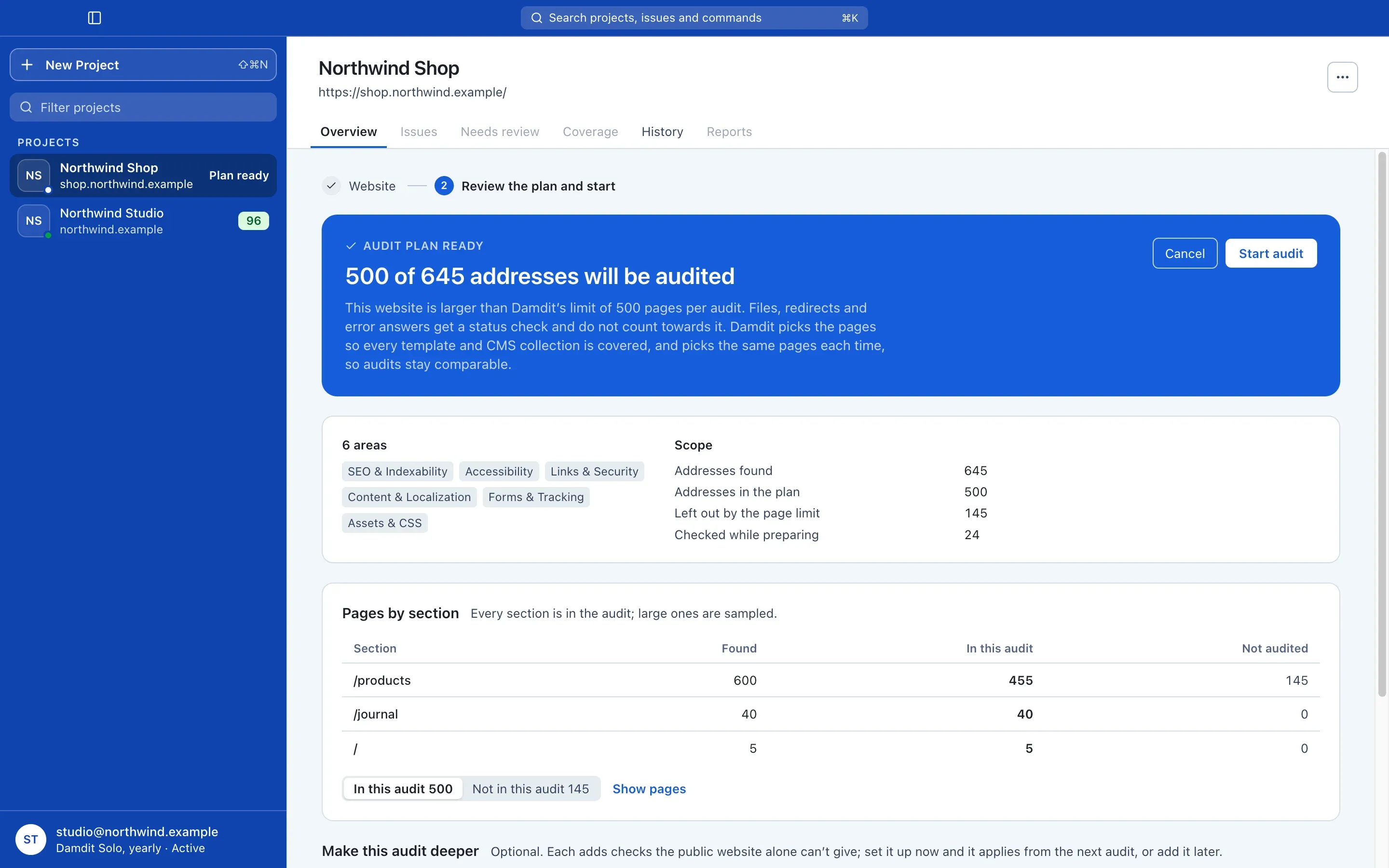
What it means for the result
Section titled “What it means for the result”Pages that weren’t audited weren’t checked, so nothing on them passed. Areas show as limited because of them, and Coverage lists them as a gap. Issues on the audited pages often come from shared templates, so fixing them usually fixes the same problem on pages that weren’t audited.
The plan is made from the first pages Damdit reads before you start the audit. Links found on audited pages after that join the audit as pages while it has fewer than 500 pages. Once the page limit is reached, Damdit only checks whether each further link answers, so a broken link is still reported with the page that links to it, and Coverage says how many pages were checked but not audited. These link checks have their own limit of 500 per audit and don’t count towards the page limit, so a large website still gets its links checked. When that limit is reached, Coverage says how many of those links weren’t checked.
A website without a sitemap is found only through its links, so which pages are audited depends on how its pages link to each other. Damdit says so in the plan before you start the audit and in Coverage.
Discovery itself stops after 5,000 addresses. Sitemaps give at most 5,000 page addresses too: once they are taken, Damdit reads no further sitemap, and Coverage says how many more entries the sitemaps it read list and how many sitemaps it didn’t read. A website whose sitemaps list hundreds of thousands of pages is audited the same way as one with 5,000.